

Reducing After-Hours Charting Without Rushing Care
A systems-based approach to shrinking documentation backlog while preserving accurate notes, patient attention, and clinician review.
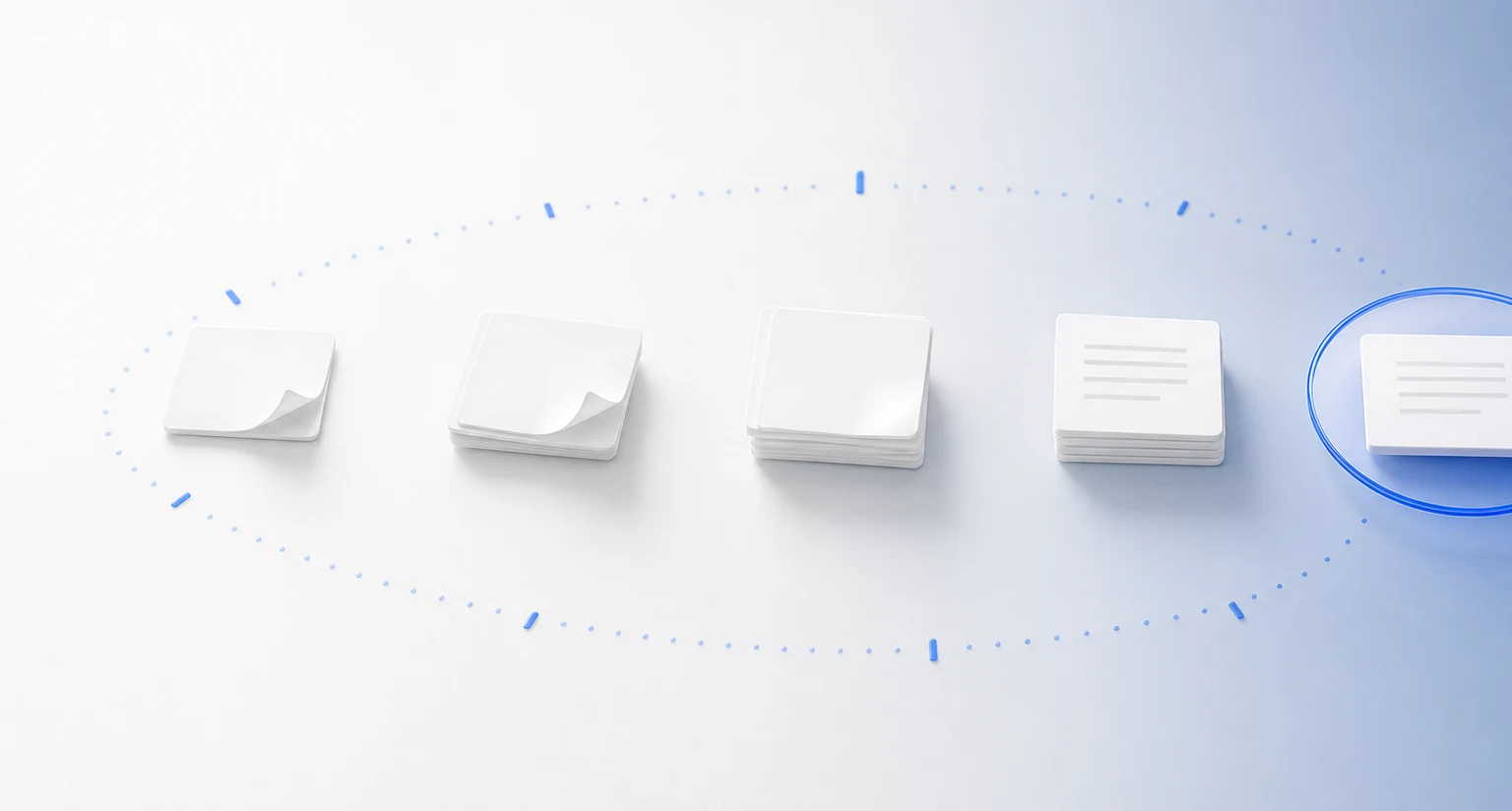
After-hours charting is often described as a time-management problem. That framing misses what happens during the workday: notes are interrupted, details are left in temporary places, documentation expectations exceed the available time, and unfinished encounters accumulate until the last patient has gone home.
The answer is not to rush visits or ask clinicians to become faster at carrying an unbounded backlog. It is to identify where documentation work is created, preserve encounter context earlier, and redesign the path from conversation to reviewed chart.
“Pajama time” is a workflow signal
In a study of 2021 EHR data from 307 primary care physicians across 31 practices, clinicians spent a median 36.2 minutes in the EHR per visit, including 6.2 minutes of “pajama time”—active EHR use from 5:30 p.m. to 7 a.m. or on weekends. The amount varied substantially among clinicians and clinics (JAMA Network Open).
That variation matters. It suggests the backlog is not explained only by individual habits. Patient complexity, staffing, team collaboration, inbox volume, templates, scheduling, and local EHR configuration all influence when the work can be completed.
After-hours EHR use also deserves attention as a workforce issue. A study combining EHR logs with burnout surveys found that higher after-hours EHR time on clinic days was associated with higher odds of emotional exhaustion, although an observational association does not prove that one causes the other (Journal of the American Medical Informatics Association). The practical conclusion is modest but important: practices should measure work outside scheduled hours and investigate it, not normalize it as an invisible part of the job.
Find the source of the backlog before choosing a solution
A useful review begins with data and direct observation. For several weeks, examine:
- Time spent writing notes during and after scheduled clinic hours.
- Same-day encounter closure and the age of open notes.
- Which visit types generate the longest or most frequently reopened notes.
- Interruptions between the encounter and note completion.
- Time spent finding patient context, switching templates, or copying information between systems.
- Note length, duplicated text, and fields that are rarely useful to the next reader.
- Work that could be performed by another trained team member within policy and scope.
EHR audit logs can help quantify workload, but numbers need context. A clinician may close notes quickly because the template fits the work, because the team shares tasks well, or because important content is being deferred. Pair metrics with clinician feedback and periodic quality review.
Build a same-day path from encounter to reviewed chart
Reducing after-hours documentation is easier when the workflow has explicit stages instead of one vague instruction to “finish the note.”
1. Prepare the right structure
Use an encounter-specific template that contains the fields needed for that clinical context. Avoid a universal template that encourages every possible detail in every note. Start with a small, intentional set; this clinical template selection guide explains the tradeoffs.
More text is not automatically more useful. In an analysis of more than 203,000 ambulatory physicians, those in the top decile of note length spent 39% more time in the EHR after hours than the median physician and closed fewer visits on the same day. Very low and very high use of templated text were both associated with greater burden, underscoring that templates need thoughtful calibration rather than maximal automation (Health Services Research).
2. Preserve the encounter at the source
When appropriate, permitted, and disclosed to the patient, capture the conversation instead of relying on memory hours later. Record only the encounter material that belongs in the approved workflow. Clinicians should separately document examination findings, observations, external records, and clinical reasoning that are not present in the conversation. See turning conversations into structured notes for a closer look at the capture-to-draft transition.
If capture is not appropriate, use a concise structured note immediately after the visit. The goal is the same: reduce the distance between the encounter and the first reliable draft.
3. Review in a bounded window
Reserve short review blocks during the scheduled day—after the encounter, between visit groups, or at another realistic point chosen by the practice. A bounded review has a clear endpoint: confirm the patient, verify the clinical story and plan, correct the draft, and move finalized information into the EHR.
Do not let the presence of a draft create a false sense of completion. An open generated note is still work in progress, and delayed review can make discrepancies harder to recognize.
4. Share work safely
Use the care team rather than treating every EHR action as physician-only work. In the primary care study above, greater team collaboration on orders and the presence of pharmacy technicians were associated with less per-visit EHR time. The correct division of work depends on licensure, organizational policy, and the task itself, but the principle is general: route administrative work to the appropriate role and reserve clinical decisions for the clinician.
5. Close the loop at the EHR
The EHR remains the destination for the finalized medical record. Confirm that copied content is associated with the correct patient and encounter, that formatting survived the transfer, and that required fields, orders, and attestations are complete. Track failures in this last step; a workflow that produces drafts faster but leaves transfer and reconciliation for the evening has only moved the bottleneck.
Treat after-hours charting as an operational problem
A documentation product cannot correct an overloaded schedule, chronic understaffing, excessive inbox volume, or unclear coverage rules. The CDC’s Impact Wellbeing Guide recommends a systems approach to healthcare worker wellbeing and explicitly directs leaders toward operational improvements rather than relying only on individual resilience (CDC/NIOSH).
For a durable improvement effort:
- Give the project an accountable operational owner.
- Set a baseline for after-hours EHR time and note turnaround.
- Pair efficiency measures with note-quality and safety checks.
- Pilot by specialty or visit type before expanding.
- Ask clinicians which steps produce rework and which information future readers actually need.
- Revisit visit length, staffing, inbox routing, and coverage when technology alone does not change the backlog.
The federal health IT burden strategy similarly calls for reducing the time required to record information and improving EHR usability, reinforcing that documentation burden is a system-design issue (Health IT Playbook).
Using ChartScribe in the same-day loop
ChartScribe lets clinicians record a patient conversation or upload an existing recording, select a SOAP, DWI, intake, or custom template, and generate a structured draft chart. The clinician can then review and edit every section before copying finalized content into the EHR.
For clinicians moving between rooms or devices, the mobile app, patient organization, visit history, and chart syncing are intended to keep drafts from becoming scattered reminders. The value proposition is not a guaranteed shorter workday; it is a workflow designed to limit later reconstruction from memory and create a consistent starting point for review. Practices should measure whether those intended benefits appear in their own deployment.
Practices should pilot the workflow against their own baseline: compare note-writing time, same-day completion, corrections, and after-hours work while also reviewing note quality. Results from other organizations or other documentation products should not be treated as evidence of ChartScribe-specific outcomes.
The safety boundary: a draft is not a completed chart
ChartScribe-generated content must be reviewed by an authorized clinician before it is finalized or placed in the EHR. Verify the patient and encounter, medications, allergies, diagnoses, measurements, assessment, plan, follow-up, and any statements that affect care or billing. Remove unsupported content and add relevant findings that were not spoken during the recording. Teams can adapt the steps in what to review before finalizing a chart to their specialty and policy.
AI-assisted notes can contain omissions, accidental additions, or fabricated details. A recent prospective pilot concluded that careful clinician review remained essential because a small number of generated notes contained errors that could cause serious harm if not corrected (JMIR Medical Informatics). Recording workflows must also follow organizational privacy and security controls and applicable consent laws.
The goal is not merely to move charting from night to day. It is to build a reliable process in which context is captured earlier, review is protected, and the final record remains accurate and clinically useful.